
Introduction
A virtual crypto portfolio helps beginners practice portfolio decisions without using real money. Instead of focusing only on one simulated buy or sell, a portfolio view shows how each decision changes allocation, exposure, available virtual cash, and review habits over time.
For paper traders, this context matters. A single simulated trade can look simple, but a full portfolio shows whether decisions are becoming consistent, oversized, emotional, or better planned. That makes a virtual portfolio one of the most useful practice tools inside a crypto simulator.
Important: SimuTradeX is for paper trading only. It does not provide financial advice, trading signals, price predictions, or real-money trade execution.
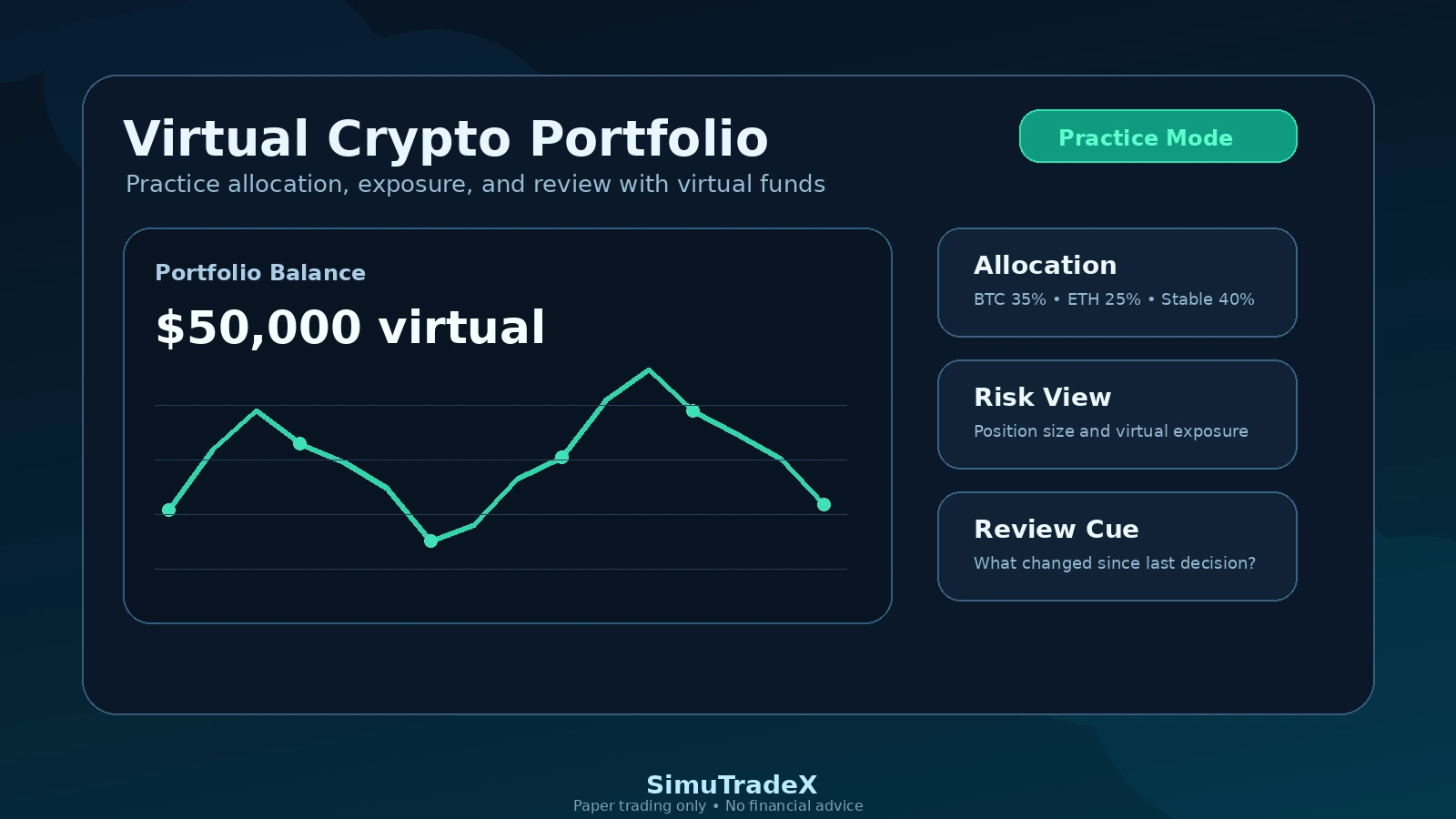
What Is a Virtual Crypto Portfolio?
A virtual crypto portfolio is a simulated account that tracks practice positions, virtual funds, and portfolio changes. It is designed for learning how decisions affect a portfolio without placing real-money trades.
Instead of asking, “Which coin should I buy?”, a better practice question is, “How would this simulated decision change my portfolio?” That shift helps beginners think about process, risk awareness, and review instead of chasing every market move.
Inside SimuTradeX, the virtual crypto portfolio can support a cleaner practice routine by connecting simulated decisions with portfolio context, balance changes, and review notes.
Why Portfolio Context Matters for Paper Trading
Paper trading is most useful when it teaches repeatable habits. A virtual portfolio helps you see whether your practice decisions are balanced or random. It can also show when too many simulated positions are being opened without a clear plan.
For example, a beginner may think they are practicing carefully because each decision feels small. But after reviewing the full portfolio, they may discover that too much virtual capital is concentrated in one asset type, one market condition, or one idea. That review is the lesson.
This is why a portfolio page should not be used only as a balance screen. It should be used as a decision journal, a risk awareness tool, and a simple way to compare what you planned with what you actually did.
Virtual Portfolio vs Single Trade Practice
| Practice Method | What It Shows | Best Use |
|---|---|---|
| Single simulated trade | Entry, exit, and result for one decision | Testing a specific idea or setup |
| Virtual portfolio | Allocation, exposure, balance, and decision history | Building a complete practice routine |
| Portfolio review | Patterns across several simulated decisions | Improving discipline and consistency |
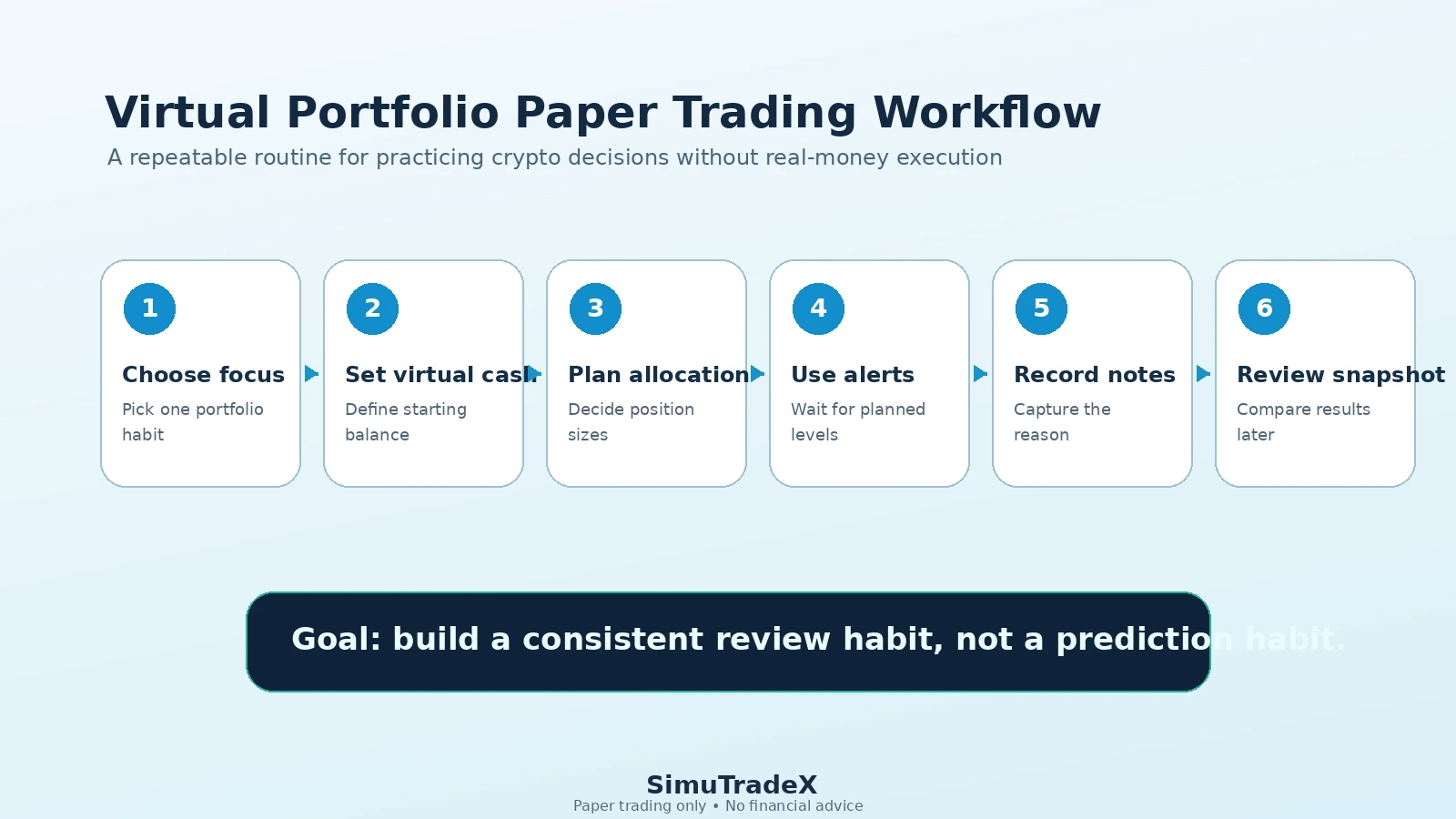
A Simple Virtual Portfolio Workflow
A beginner-friendly workflow does not need to be complicated. The goal is to practice the same process again and again so that your review becomes easier and more honest.
- Choose a practice focus: Decide whether you are practicing allocation, patience, position sizing, or review habits.
- Set virtual starting capital: Treat the starting balance as a fixed practice account, not as unlimited play money.
- Plan the allocation: Decide how much virtual capital can go into each simulated idea before taking action.
- Use planned levels: Connect decisions with crypto price alerts so you are not reacting to every small move.
- Record the reason: Write down why the simulated decision was made.
- Review the result: Compare the decision with the portfolio after some time has passed.
Practical Routine for Beginners
Start With Fewer Simulated Positions
Opening too many practice positions can make review harder. A smaller virtual portfolio is easier to understand because each decision has a visible effect. Beginners can start with a few simulated assets, then expand only when the review process feels clear.
Define a Virtual Position Size Before Acting
Before creating a simulated position, decide how much of the virtual portfolio it should represent. This helps you practice risk awareness without turning the simulator into a guessing game.
Use Alerts to Practice Patience
Alerts can help you wait for planned levels instead of checking charts constantly. In paper trading, the value of an alert is not a promise that a level is good. It is a reminder to review your plan when a condition is reached.
Review With a Snapshot
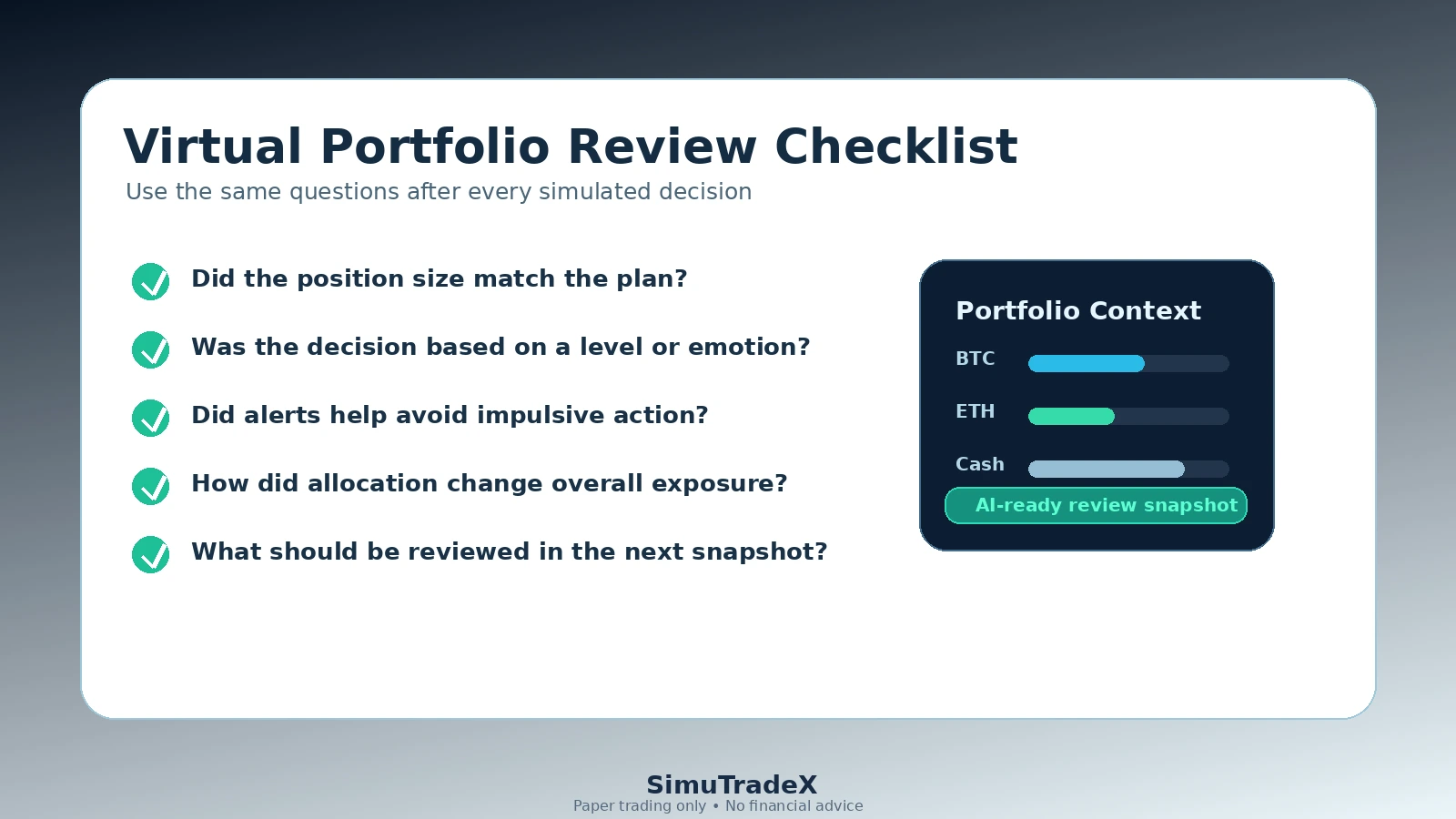
After several simulated decisions, use an AI-ready portfolio snapshot or structured review summary to look for patterns. The goal is to ask better questions: Did the plan make sense? Was the size consistent? Did the portfolio become too concentrated?
Common Mistakes With Virtual Portfolios
Mistake 1: Treating Virtual Funds Like Unlimited Money
Paper trading becomes less useful when virtual funds are treated as meaningless. Use a realistic starting balance and practice as if every simulated decision should be reviewed later.
Mistake 2: Measuring Only Profit or Loss
Result matters, but it is not the full lesson. A good paper trading review also asks whether the decision followed the plan, whether the size was reasonable, and whether the portfolio stayed balanced.
Mistake 3: Ignoring Allocation
A portfolio can become too concentrated even when each individual decision looks small. Reviewing allocation helps beginners understand how several decisions combine into one overall exposure.
Mistake 4: Practicing Without Notes
Without notes, it is hard to know why a simulated decision was made. Even a short note can improve review quality because it connects the action with the original reason.
How SimuTradeX Supports Virtual Portfolio Practice
SimuTradeX is built around simulated practice. The platform helps paper traders connect virtual portfolio tracking with alerts, review habits, and structured decision-making. You can explore the broader SimuTradeX features to see how portfolio tracking fits with paper trading tools.
For users who want more structure, simulated automation rules can also support practice scenarios. These rules are simulated only and should be used to test routines, not to execute real trades.
The best use of SimuTradeX is not to look for predictions. It is to build a repeatable practice environment where every virtual decision can be reviewed with context.
Final Thoughts
A virtual crypto portfolio can make paper trading more useful because it shows the bigger picture. It helps beginners practice allocation, position sizing, patience, and review habits without real-money execution.
Instead of focusing on one simulated trade at a time, use the portfolio as a training record. Over time, that record can show whether your process is becoming more consistent.
Paper trading only. No financial advice. No real-money trades are executed.
FAQ
What is a virtual crypto portfolio?
A virtual crypto portfolio is a simulated account that tracks practice positions, virtual funds, balance changes, and allocation. It is used for learning and review, not for real-money execution.
Is a virtual portfolio useful for beginners?
Yes. Beginners can use it to understand how simulated decisions affect a full portfolio instead of judging each practice trade in isolation.
Is paper trading the same as real trading?
No. Paper trading can help with practice and review, but it does not include all the emotions, risks, fees, liquidity issues, or consequences of real trading.
Does SimuTradeX provide financial advice?
No. SimuTradeX does not provide financial advice, trading signals, price predictions, or recommendations about what to buy or sell.
Does SimuTradeX execute real trades?
No. SimuTradeX is for paper trading only. No real-money trades are executed through the platform.
How should beginners review a virtual portfolio?
Beginners should review position size, allocation, decision notes, alert usage, and whether each simulated action followed a plan. The focus should be process improvement, not profit promises.