
Introduction
Paper trading becomes more useful when users review their decisions instead of only checking whether a simulated trade ended green or red. A single virtual trade can show one result, but a structured review can show the full context: position size, portfolio exposure, alerts, timing, notes, and the reason behind the decision.
That is where an AI-ready portfolio snapshot can help. It organizes paper trading information into a clear review package so users can understand what happened, what they planned, and what they may want to improve next time.
Important: SimuTradeX is for paper trading only. It does not provide financial advice, trading signals, price predictions, or real-money trade execution.
What Is an AI-Ready Portfolio Snapshot?
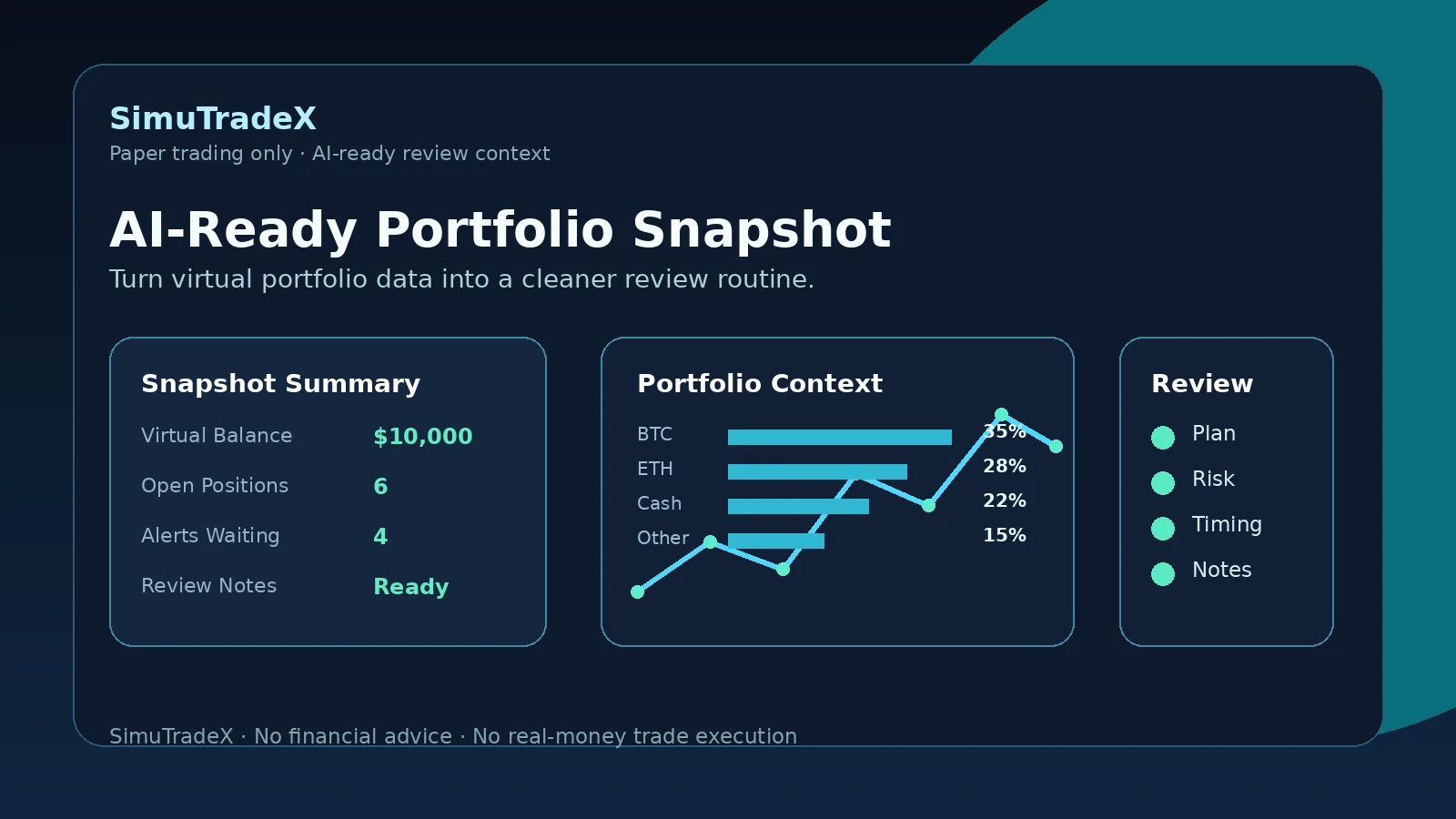
An AI-ready portfolio snapshot is a structured summary of a user's paper trading context. Instead of looking at scattered information across charts, notes, alerts, and positions, the snapshot packages the most important details into one review-friendly format.
In a crypto paper trading simulator, this can include virtual balance, open simulated positions, portfolio allocation, unrealized PnL, recent trade activity, alert history, and written notes. The goal is not to predict the market. The goal is to make review easier and more consistent.
For beginners, this is useful because many trading mistakes are not visible from the final result alone. A simulated trade may look successful even if the plan was weak. Another trade may show a virtual loss even though the process was disciplined. A snapshot helps separate result review from process review.
Why This Matters for Paper Trading
Paper trading is not only about practicing entries and exits. It is also about learning how decisions affect the whole virtual portfolio. Without review, users may repeat the same habits without noticing them.
A portfolio snapshot encourages users to ask better questions:
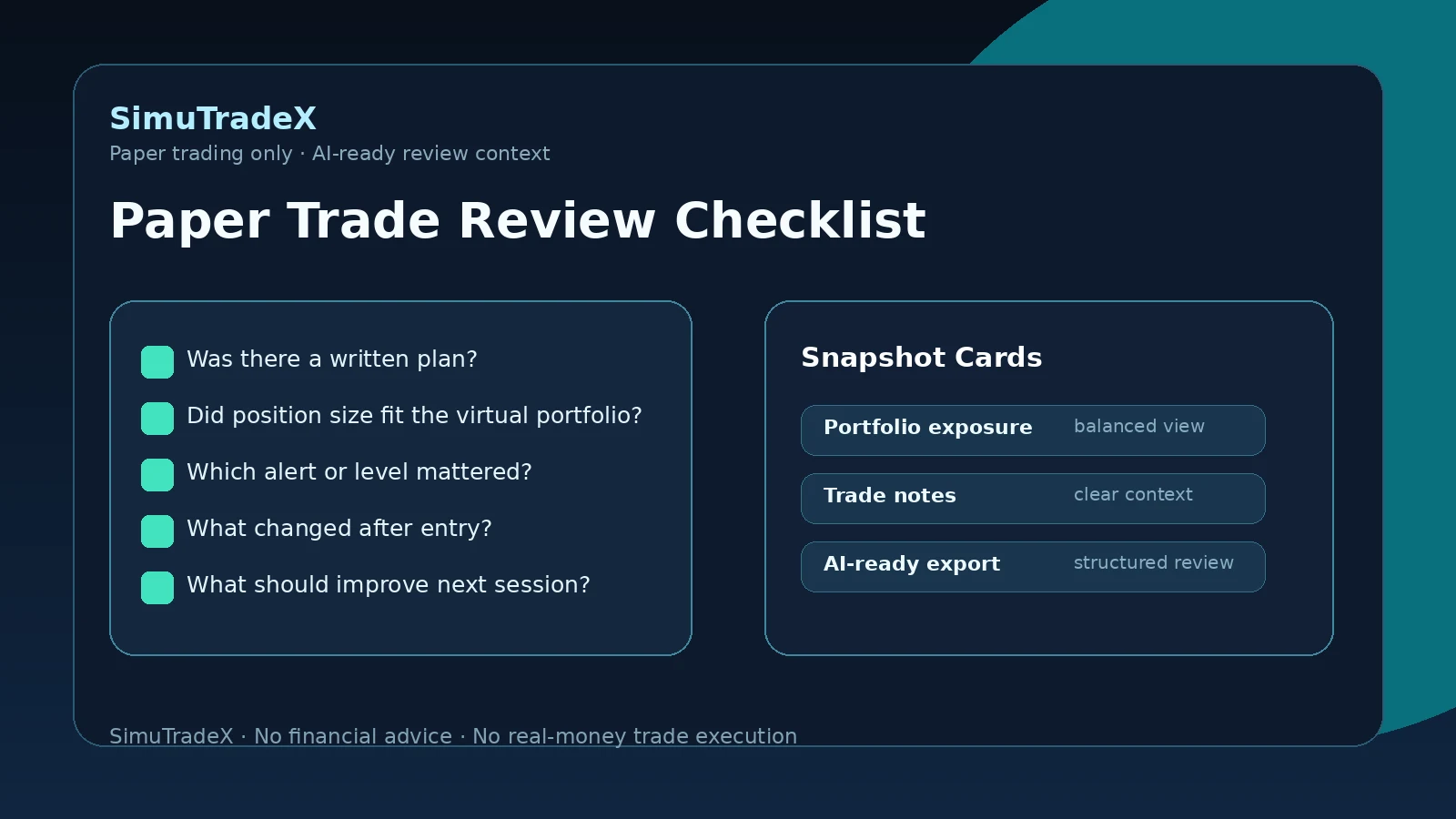
- Was the simulated trade connected to a clear plan?
- Did the position size make sense inside the virtual portfolio?
- Was the decision triggered by a planned alert or by emotion?
- How much exposure did the portfolio already have?
- Did the user write a reason before acting?
- What should be changed in the next practice session?
These questions turn paper trading into a learning loop. The user is no longer only asking, “Did the price move?” The user is also asking, “Did I follow my process?”
Snapshot Review vs Random Trade Review
Many beginners review trades in a very simple way: they look at the final result and decide whether the trade was good or bad. This is incomplete because the final result does not always explain the quality of the decision.
| Area | Random Review | Snapshot-Based Review |
|---|---|---|
| Main Focus | Final virtual profit or loss | Plan, context, execution, and result |
| Portfolio Context | Often ignored | Reviewed before judging the trade |
| Decision Quality | Hard to measure | Easier to compare across sessions |
| Best Use | Quick result checking | Building a repeatable practice routine |
| SimuTradeX Role | Not the focus | Organizes data for paper trading review |
This difference matters because a strong trading routine is built through repetition and review. A snapshot makes that review more organized.
A Simple AI-Ready Review Workflow
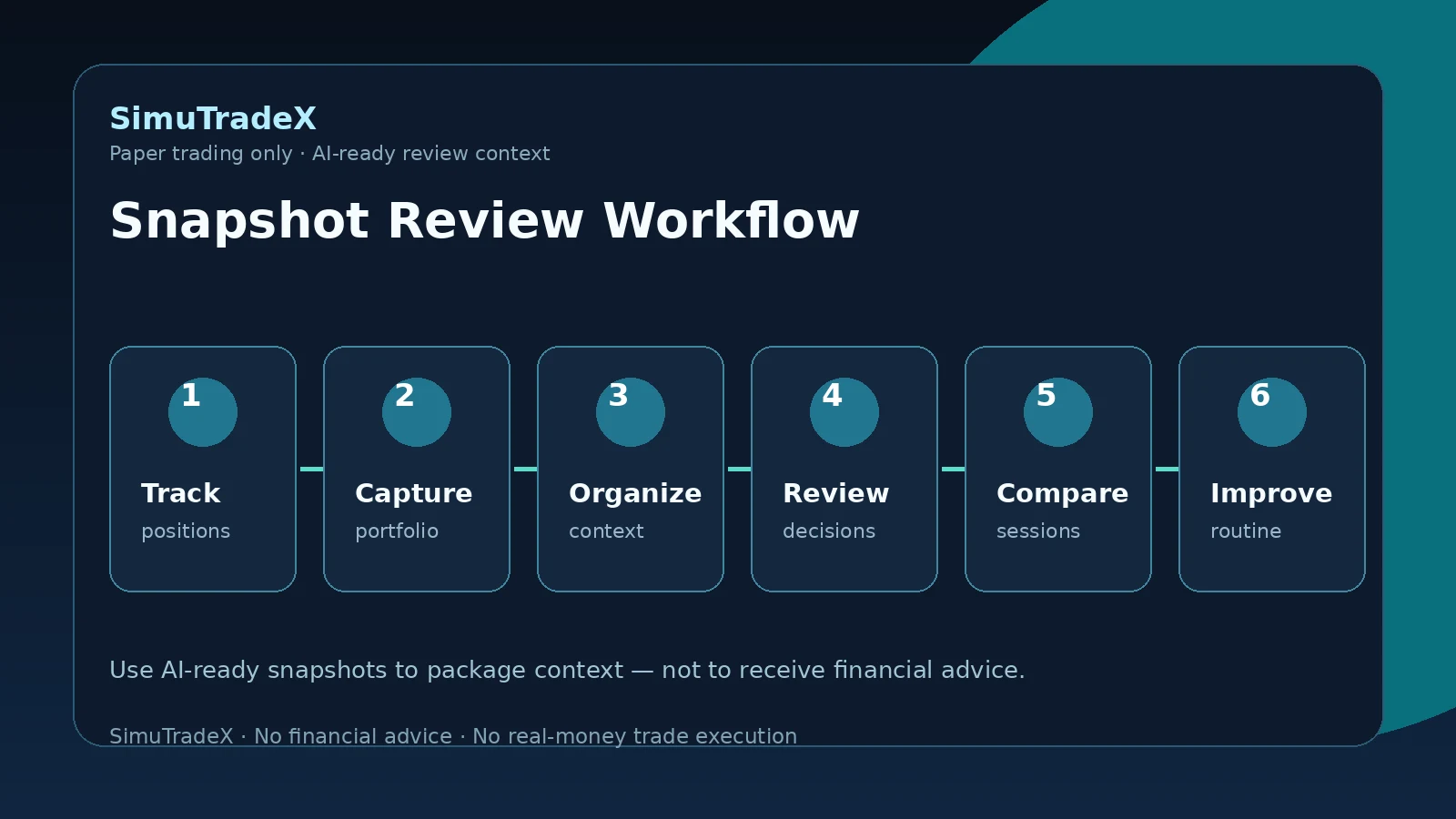
Users do not need a complicated process to benefit from portfolio snapshots. A simple workflow is usually enough for beginner-friendly paper trading practice.
- Start with a clear practice goal. Decide what the session is meant to test, such as alert discipline, position sizing, or portfolio allocation.
- Open simulated positions only when there is a reason. Avoid random clicking. Write down the reason for the paper trade.
- Track the virtual portfolio. Review balance, allocation, open positions, and unrealized PnL.
- Use planned alerts. Connect decisions to levels that were chosen before the move whenever possible.
- Capture the snapshot. Package portfolio context, notes, and trade information for review.
- Review the process. Compare the plan with what actually happened during the simulated trade.
- Write one improvement. End each session with one practical habit to test next time.
What Should Be Included in a Portfolio Snapshot?
A useful paper trading snapshot should include enough context to make review meaningful, but not so much information that the user feels overwhelmed.
Virtual Portfolio Balance
The current virtual balance gives users a starting point for review. It shows how the overall paper account changed after simulated decisions.
Open Simulated Positions
Open positions help users see whether they are concentrated in one coin, one theme, or one type of setup. This supports better risk awareness inside the simulator.
Portfolio Allocation
Allocation shows how much of the virtual portfolio is spread across coins, cash, and active positions. This helps users avoid reviewing trades in isolation.
Recent Alerts
Alerts can explain why a user returned to the chart. A good snapshot shows whether the decision followed a planned level or happened without a clear trigger.
Trade Notes
Notes are important because they capture the user's thinking before and after the simulated trade. Without notes, it is easy to rewrite the reason after the result is known.
Review Questions
A snapshot becomes more valuable when it includes questions that guide the user toward process review instead of emotional judgment.
Common Mistakes When Reviewing Paper Trades
Even in a simulator, review habits can become messy. Here are common mistakes beginners should avoid.
Only Reviewing Winning Simulated Trades
Users may feel more comfortable reviewing paper trades that ended positively. But losing simulated trades often contain the most useful lessons. The goal is not to feel good about every result. The goal is to understand the process.
Ignoring Portfolio Exposure
A single simulated trade may look reasonable on its own, but it may create too much exposure when combined with other positions. Snapshot review helps users look at the whole virtual portfolio.
Changing the Story After the Result
After a trade closes, it is easy to say the reason was obvious. Written notes and snapshots reduce this problem because they preserve the original context.
Expecting AI to Make Decisions
An AI-ready snapshot should support review, not replace user judgment. SimuTradeX does not provide financial advice, trading signals, or price predictions.
Reviewing Too Much at Once
Beginners sometimes try to analyze every small detail. A better approach is to focus on one improvement per session, such as waiting for alerts, reducing position size, or writing clearer notes.
How SimuTradeX Supports AI-Ready Portfolio Review
SimuTradeX is designed as a crypto paper trading workspace, not an exchange and not a signal service. The platform helps users practice simulated decisions, track virtual portfolios, set alerts, test rule-based workflows, and organize context for review.
Users can start with the SimuTradeX features, track decisions inside a virtual crypto portfolio, use crypto price alerts to define planned levels, and prepare an AI-ready portfolio snapshot for structured review. For users testing repeatable conditions, simulated automation rules can also support a more disciplined practice routine.
This structure helps users move away from random simulated trades and toward a clearer process: plan, simulate, track, review, and refine.
Practical Routine for Beginners
A beginner-friendly routine can be simple:
- Choose one practice theme for the day.
- Pick one or two coins to observe.
- Set planned price alerts before acting.
- Open a simulated trade only if the setup matches the plan.
- Track the trade inside the virtual portfolio.
- Create a snapshot after the session.
- Write one lesson and one improvement for the next session.
This routine keeps paper trading focused. Instead of trying to master everything at once, the user improves one habit at a time.
Final Thoughts
An AI-ready portfolio snapshot can make paper trading more valuable because it organizes the information users need for honest review. It does not predict prices, provide signals, or remove risk from real markets. Instead, it helps users study their own simulated decisions with clearer context.
For beginners, this can be the difference between random practice and structured learning. A snapshot gives each session a record, a review path, and a reason to improve.
Paper trading only. No financial advice. No real-money trades are executed.
FAQ
What is an AI-ready portfolio snapshot?
An AI-ready portfolio snapshot is a structured summary of paper trading context, including virtual portfolio data, simulated positions, alerts, notes, and review questions.
Does an AI-ready snapshot provide trading signals?
No. A snapshot is for review and organization. It does not provide financial advice, trading signals, price predictions, or real-money trade execution.
How does a snapshot help paper traders?
It helps users review simulated decisions with more context, including portfolio exposure, position size, alert history, and written notes.
Is this useful for beginners?
Yes. Beginners can use snapshots to build a repeatable review habit and understand whether they followed their paper trading plan.
Should every paper trade have a snapshot?
Not every small practice action needs one, but important sessions and larger simulated portfolio changes are easier to review when a snapshot is captured.
Does SimuTradeX execute real trades?
No. SimuTradeX is for paper trading practice only. No real-money trades are executed.